

The Future of Mental Health Diagnosis: What Biomarkers Could Change Everything
For decades, if you walked into a psychiatrist's office with depression or anxiety, the road to a diagnosis looked something like this: you described your symptoms, your clinician asked questions, and a diagnosis was reached based on how closely your experience matched the criteria in the Diagnostic and Statistical Manual of Mental Disorders — psychiatry's most influential reference guide. No blood test. No brain scan. No genetic marker. Just conversation and clinical judgment.
That may be about to change.
The American Psychiatric Association (APA) published a landmark series of papers in the American Journal of Psychiatry in early 2026, outlining a proposed roadmap for the next generation of the DSM. At the center of that vision: biomarkers — measurable biological signals, from blood proteins to brain imaging to genetic data, that could one day tell a clinician not just what is wrong, but why, and which treatment is most likely to help.
It is, in the words of one expert quoted by KFF Health News, "the beginning of a revolution."
What Is the DSM — and Why Does It Matter?
The Diagnostic and Statistical Manual of Mental Disorders is the standard classification guide used by clinicians, researchers, hospitals, and insurance companies across the United States and beyond. When a provider diagnoses a patient with ADHD, major depressive disorder, bipolar disorder, PTSD, or any other psychiatric condition, they are matching the patient's symptoms against criteria defined in the DSM. Insurance coverage, treatment decisions, disability determinations, and research funding all follow from DSM diagnoses.
The current edition, DSM-5-TR, remains almost entirely symptom-based. There are no laboratory tests required or even recommended for most psychiatric diagnoses. The APA's newly proposed roadmap explicitly acknowledges this limitation — and signals that the next version of the manual will be built around changing it.
The APA's Future DSM Strategic Committee has proposed renaming the manual from Diagnostic and Statistical Manual to Diagnostic and Scientific Manual — a subtle but significant signal about where psychiatry intends to go.
What Are Psychiatric Biomarkers?
A biomarker is any measurable biological indicator that provides information about a disease or its treatment — the same concept already used extensively in oncology, cardiology, and, more recently, neurology. In cancer care, for example, genetic biomarkers determine which targeted therapies a patient is likely to respond to. In Alzheimer's disease, brain imaging and cerebrospinal fluid tests are now used to confirm a diagnosis biologically. In May 2025, the FDA cleared the first blood test for diagnosing Alzheimer's disease — a milestone that the APA's biomarkers subcommittee cited directly as a model for what psychiatry might one day achieve.
In psychiatric medicine, the candidate biomarkers under investigation span several categories:
Blood proteins like C-reactive protein (CRP) that indicate immune system activity. Elevated CRP is found in roughly a quarter of patients with depression and may predict which treatments are most effective.
Neuroimaging techniques including fMRI and PET scans that measure brain structure, activity patterns, and connectivity — which differ in measurable ways in conditions like schizophrenia and depression.
DNA and gene expression data that may reveal biological predispositions to specific psychiatric conditions or inform how a patient metabolizes certain medications.
Data collected from wearable devices and smartphones — sleep patterns, activity levels, heart rate variability — that can signal shifts in mental state over time.

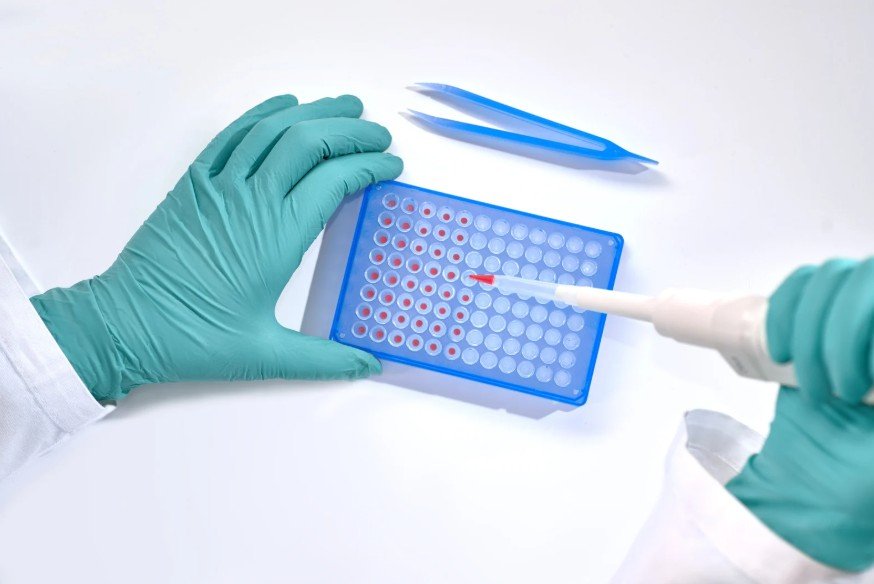
Blood-based biomarkers like C-reactive protein are already used in other medical fields. Psychiatry is now moving to validate similar markers for conditions like depression and schizophrenia.
The Problem Biomarkers Could Help Solve
To understand why this shift matters, consider what prescribing psychiatric medication looks like today. A clinician assesses your symptoms, selects what seems like the most appropriate medication based on diagnosis, and waits to see if it helps. If it doesn't, you try another. Then another.
Matthew Eisenberg, director of the Center for Mental Health and Addiction Policy at Johns Hopkins, described the current approach to KFF Health News as "a bit of a crapshoot." In a landmark clinical trial from the early 2000s, only about 30% of patients with depression saw their symptoms fully resolve with their first antidepressant. The rest cycled through additional medications, sometimes over months or years.
"This is a recognition that what we've done up to this point has not been good enough. And we can do better."
— Andrew Miller, Professor of Psychiatry, Emory University School of Medicine, as quoted in KFF Health NewsBiomarkers offer a potential path out of this trial-and-error loop. Take the inflammatory protein C-reactive protein (CRP): research has shown that patients with elevated CRP levels tend to respond better to medications that affect dopamine signaling than to standard SSRIs (selective serotonin reuptake inhibitors). If a simple blood test could flag this at the start of treatment, clinicians could bypass ineffective treatments and get patients to the right medication faster — reducing suffering, time, and cost.
This same logic extends to other conditions. In schizophrenia and substance use disorders, the APA's biomarker subcommittee has identified biological signatures with potential diagnostic value. The goal is not to replace clinical evaluation, but to add an objective layer beneath it — the same way an electrocardiogram complements a cardiologist's examination without replacing it.
The APA's Proposed Four-Part Diagnostic Framework
The paper published in the American Journal of Psychiatry is part of a suite of proposals from the APA's Future DSM Strategic Committee, which was established in 2024 and chaired by Maria Oquendo, MD, PhD, chair of psychiatry at the University of Pennsylvania. The committee proposes reorganizing diagnostic assessment into four integrated parts:
- Contextual factors — socioeconomic, cultural, and environmental determinants of health, along with life stage and quality-of-life measures
- Biomarkers and biological factors — genetics, brain imaging, blood-based inflammation markers, and digital health data
- Diagnoses — maintaining familiar categories (depression, anxiety, schizophrenia, etc.) while allowing for variable levels of specificity and severity
- Transdiagnostic features — symptoms and patterns that cut across multiple conditions, such as sleep disturbance, emotional dysregulation, and cognitive impairment
This framework represents a meaningful departure from the DSM's historically atheoretical stance — a design choice made in 1980 precisely because scientific consensus about the biological roots of mental illness didn't exist yet. The committee acknowledges that uncertainty still exists, but argues that enough biological knowledge has now accumulated to begin moving toward a more science-grounded model.
What This Could Mean for Patients
If biomarker-informed diagnosis becomes standard practice, the diagnostic experience could look quite different. Rather than arriving at a diagnosis based solely on your reported symptoms, your clinician might also consider a blood panel, a genetic screening, or even passive data from your phone or wearable to build a fuller picture. Treatments could be tailored to your biology — not just your symptom checklist.
This is especially significant for conditions like depression, where the same diagnosis can mask very different underlying biological profiles. One person's depression may be primarily inflammatory; another's may involve neurotransmitter dysregulation; another may trace back to hormonal or autoimmune factors. Biomarkers could help distinguish these subtypes — and select treatments accordingly.
For patients who have struggled to find effective treatment, or who have spent years cycling through medications that didn't work, this kind of precision would be a profound change. Talk to your provider about what this research means for your care →
The Critical Caveat: Biomarkers Are Not Clinically Ready Yet
The APA is careful to emphasize that psychiatric biomarkers are not yet validated for routine clinical use. For decades, researchers have pursued biological markers for mental illness with limited success. The FDA's standard for biomarker validation — primarily governed through its Biomarker Qualification Program — is rigorous. To date, only Alzheimer's-related biomarkers have cleared that bar in the neurological and psychiatric space.
C-reactive protein, while promising, still requires what the APA paper calls "robust validation" across large, diverse, longitudinal studies before it can be recommended in clinical guidelines. The same is true for most other candidate biomarkers currently under investigation.
This validation work requires sustained, large-scale funding — which is precisely where the situation becomes complicated. The APA paper calls for "a coordinated, well-funded" research effort, but the current funding environment is precarious. According to a research letter in JAMA, the National Institute of Mental Health had at least 128 grants worth nearly $173 million canceled in 2025 amid federal budget cuts. While some funding has since been restored, researchers in this field report ongoing uncertainty about the stability of their work.
The APA's biomarker paper acknowledges directly that the DSM's history has been shaped by the absence of validated biological markers. That absence is no longer treated as permanent — but bridging the gap will require funding, coordination, and time.
How We Got Here: A Brief History
The DSM adopts an atheoretical, symptom-based approach to psychiatric classification — a deliberate choice made because consensus on biological mechanisms didn't exist. This framework has governed psychiatric diagnosis ever since.
Armed with new neuroimaging and genetics technology, psychiatrists hoped to find biological "clusters" matching DSM categories in brain scans and genetic data. The research largely did not deliver the expected results, reinforcing symptom-based diagnosis.
The DSM-5 considered moving toward a more neurobiological framework but ultimately did not adopt one, reflecting a consensus that no biomarkers had yet achieved the specificity and sensitivity required for clinical use.
The APA establishes a dedicated committee to rethink the DSM from the ground up, tasked with integrating scientific advances in genetics, brain imaging, inflammation research, and digital health data.
The FDA clears the first blood test for diagnosing Alzheimer's disease — a landmark moment cited by the APA's biomarker subcommittee as a concrete proof-of-concept for what psychiatry might achieve.
The Future DSM Strategic Committee publishes a series of papers in the American Journal of Psychiatry proposing a structured framework for integrating biomarkers into future DSM editions — the most comprehensive rethinking of psychiatric classification since DSM-III.
Open Questions and Informed Skepticism
Not everyone in the field is convinced that biomarkers will ultimately transform psychiatry. Steve Hyman, former director of the National Institute of Mental Health, has argued that the DSM's diagnostic categories may not reflect how mental illness actually works in the brain — meaning that biomarkers mapped to current disorder labels might not be biologically meaningful even if they can be found.
Others raise practical concerns. Biomarker testing can be expensive. Some tests — like cerebrospinal fluid analysis — are invasive. Critics question whether expanded diagnostic testing might make mental health care less accessible, or create new disparities in insurance coverage. There are also privacy implications: biological and genetic data is uniquely sensitive, and its integration into routine psychiatric records raises questions about who can access it and how it might be used.
The committee acknowledges these concerns. Their published paper emphasizes that the process for introducing biomarkers into the DSM will be "structured, rigorous, and guided by robust science," with attention to cultural and equity considerations. The APA has also committed to engaging with insurers to ensure that validated biomarker tests, when they become available, are covered by third-party payers.
What This Means for You Right Now
Biomarker-guided psychiatric diagnosis is not available as standard care today — and may be years away from widespread clinical adoption. But this research trajectory matters for current patients in several concrete ways:
- Your symptoms may have biological roots that haven't been explored. As the case described in KFF Health News illustrates, mental health symptoms are sometimes driven or worsened by underlying medical conditions — inflammation, autoimmune disease, hormonal imbalance, or sleep disorders. A comprehensive evaluation should always consider these possibilities.
- Medication decisions don't have to be pure guesswork. While full biomarker validation is still pending, your psychiatrist can already use cognitive assessments, detailed clinical history, and evolving pharmacogenomic data to personalize treatment choices.
- The field of psychiatry is moving toward greater rigor. The APA's commitment to a more scientifically grounded DSM signals ongoing improvement in diagnostic precision — better news for anyone who has felt frustrated by the current system's limitations.
- Telehealth providers are at the forefront of evidence-based care. As telepsychiatry platforms continue to evolve alongside research, patients can access board-certified psychiatric care that stays current with emerging science — without leaving home.
If you've tried multiple medications for depression, anxiety, or another condition without finding relief, you are not alone — and you are not without options. An updated evaluation that considers medical co-factors, sleep, and treatment history may open new paths forward.
Don't Wait for the Future — Get Expert Care Today
The science of psychiatry is evolving. Our board-certified providers stay at the forefront of evidence-based practice — delivering thorough, personalized evaluations via secure video from anywhere on the East Coast.
Book Your AppointmentMost major insurance plans accepted | Same-week appointments available
Primary Sources & Further Reading
- Ducharme J. Psychiatrists' Use of Biomarkers Could Open a New Window Into Mental Health Diagnoses. KFF Health News. March 17, 2026. kffhealthnews.org
- Future DSM Strategic Committee. The Future of DSM: Role of Candidate Biomarkers and Biological Factors. Am J Psychiatry. 2026. psychiatryonline.org
- American Psychiatric Association. APA Releases Roadmap for the Future of the DSM. psychiatry.org
- Aftab A. The Future DSM: Bold Redesign, Lingering Blind Spots. Psychiatric Times. 2026. psychiatrictimes.com
- Melisko M, et al. Psychiatrists Plan to Overhaul the Mental Health Bible. Scientific American. February 2026. scientificamerican.com
- FDA. FDA Clears First Blood Test for Diagnosing Alzheimer's Disease. May 2025. fda.gov
- National Institute of Mental Health grant cancellations. JAMA research letter, 2025.